


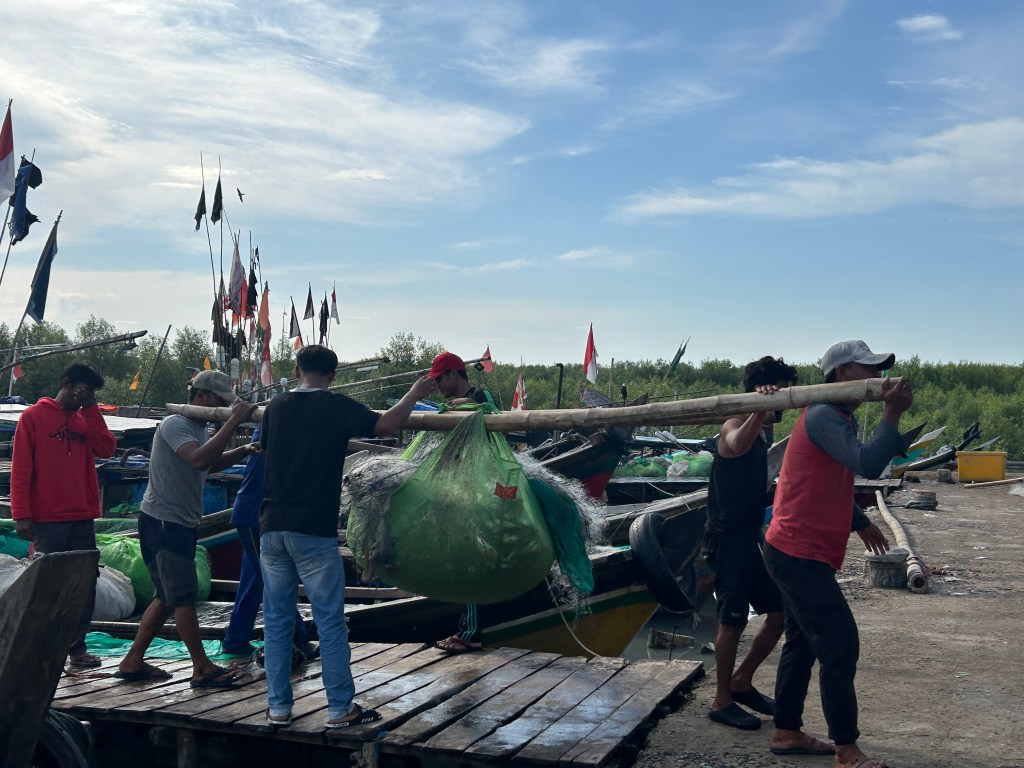
Indonesia is the world’s second largest fish producing country, yet its fisheries sector is under growing threat. Climate change, marine pollution, and overfishing continue to damage ecosystems and undermine the livelihoods of coastal communities. While policy and technical interventions abound, they often fall short for failing to address a root issue: behavior. Fishers still use destructive practices like trawling and explosives, not due to ignorance, but due to perceived short-term gains and embedded social norms.
The Case for Behavioral Approaches
The Walton Family Foundation (WFF) collaborated with Tulodo to embed behavioral science into partner programs as part of its commitment to sustainable fishing. Through training, coaching, and field engagement, Tulodo introduced frameworks like COM-B and EAST to help organizations uncover the psychological, social, and structural drivers of unsustainable behaviors. The goal: move beyond awareness campaigns to interventions that actually shift practice.
Insights from the Field
The two-day workshop held in Bogor back in March 2024 brought together 25 participants from 10 WFF partner organizations. Before the workshop, only 38% recognized that increasing knowledge does not guarantee behavior change; afterward, this rose to 83%. Understanding of behavior intervention stages jumped from 22% to 88%. Tulodo then provided tailored coaching to the Environmental Defense Fund (EDF) and Mitra Bentala, focusing on fisher communities and women-led fish processing groups in East Lampung.
The Road to Transformation
Following the workshop, Training delivered by Tulodo in April 2025 helped five women-led groups advance their skills in packaging, marketing, and e-commerce. Participants saw an average knowledge gain of 38.58% from pre- to post-test. Action plans included launching TikTok accounts, revising pricing strategies, and holding monthly meetings, tangible shifts toward sustainable, independent enterprise.
Recommendations for Scaling Impact
The final report calls for deeper investment in three areas: sustained technical assistance for women’s groups, formalizing community business structures such as cooperatives, and strengthening multi-stakeholder networks. These steps are essential to ensure that behaviorally-informed interventions are not one-off efforts, but embedded in long-term strategies for community-based fisheries management.
A Call to Center Human Behavior
This project proves that behavior change is foundational to sustainability. Tulodo’s people-centered, evidence-driven approach turns insights into action, helping partners design smarter, more adaptive programs. As Indonesia seeks to protect its marine resources and strengthen coastal economies, Tulodo stands ready to support governments, donors, and NGOs through behaviorally-informed consulting and implementation that delivers real impact.